A practical blueprint for hobbyists and makers earning $500–$3,000/month part-time who want to replace their day-job income built on pricing math, proven sales channels, and scalable production systems.
To scale a CNC business from side hustle to full-time income, you need 5 things working together: a clear profitable niche, a pricing model that covers machine time plus labor plus overhead at a 2.0–2.5× markup, 2 or 3 reliable sales channels (Etsy, Shopify, wholesale), batched production systems that cut setup time, and a financial runway of 3–6 months of expenses saved before you quit your day job. Most successful full-time CNC operators replace their salary only after their side hustle consistently clears 1.5× their day-job take-home for 90 straight days.
Fast facts every CNC seller should know:
Net profit margins for small CNC shops typically fall between 10% の三脚と 30%, with personalized gifts hitting the top of that range.
Value-based pricing on custom work often lands 40-60% 売上総利益, compared to 25–35% on generic wholesale orders.
A 2.0× to 2.5× cost-plus markup (materials + machine time + labor + overhead) is the standard formula for batch-produced SKUs.
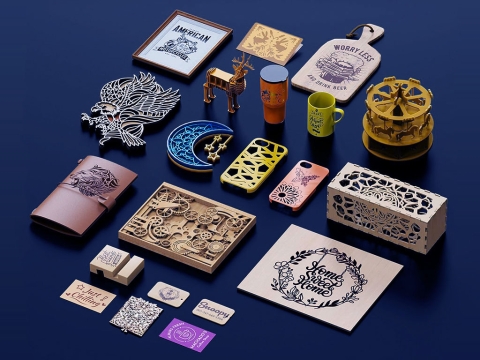
Etsy sellers report that personalized signs, cutting boards, and pet products are among the most consistent year-round performers.
A fully booked hobby CNC operator can realistically produce $3,000–$8,000 in monthly revenue from a single-car garage workspace.
1. Mindset & Business Foundation
The leap from side hustle to full-time CNC income is less about the machine and more about how you run the business around it. Treating shop time like paid work tracked, priced, and scheduled is the 1st real shift.
Before you scale, you need a financial runway. Most CNC entrepreneurs who succeed long-term don't quit their day job on the 1st $5K month. They wait until the side hustle pays the mortgage consistently, typically 90 days of clearing 1.5× their take-home pay, plus 3 to 6 months of living expenses saved in cash.
3 foundation habits that separate full-timers from hobbyists
✓ Track every hour of shop time against every order, not just cut time, but design, setup, sanding, finishing, and packaging.
✓ Keep business money and personal money in separate accounts from your very 1st sale.
✓ Price for the business you want in 2 years, not the business you have today under-pricing now creates a customer base that won't follow you up.
Many hobbyists delay this step because pricing feels uncomfortable. That discomfort is the skill gap and the step-by-step guide to starting a business with a laser cutter walks through the same mindset shift for laser-based shops, where margins and startup costs tend to be even more forgiving for beginners.
2. Product Selection & Niche Domination
The fastest path to full-time income is narrow, not wide. Operators who dominate 一つ category carved house signs, personalized pet products, and wedding décor typically out-earn generalists within the 1st year because they batch faster, market tighter, and build reviews in a single Etsy search lane.
A strong CNC niche has 3 signals: repeatable SKUs, personalization potential (which raises perceived value), and a customer who buys more than once or refers friends.
Niche comparison: profitability at a glance
| 製品ニッチ | Avg. Sell Price | 材料費 | 推定マージン | Measurement (difficulty to scale) |
|---|---|---|---|---|
| パーソナライズされた木製看板 | $ 40- $ 80 | $ 5- $ 12 | 55-70% | Easy - high repeat demand |
| Engraved cutting & charcuterie boards | $ 35- $ 90 | $ 8- $ 18 | 50〜65% | Easy - gift-driven |
| Pet products (name signs, feeders) | $ 25- $ 60 | $ 3- $ 8 | 60〜75% | Moderate - seasonal swings |
| Custom furniture & cabinetry | $ 300- $ 1,500 | $ 60- $ 300 | 35-50% | Hard - long lead times |
| Prototyping for local businesses | 1件あたり75ドル~400ドル | 変数 | 40-60% | Hard - relationship sales |
Figures reflect typical small-shop pricing in North American markets; your local rates will vary.
If you're still picking a machine to match your niche for example, a small footprint for signs versus a larger bed for furniture the 初めてCNCルーターを購入する際のガイド covers bed size, spindle power, and software compatibility, all of which quietly determine which niches will be profitable for you.
3. Pricing, Profit & Financial Planning
Pricing is where most CNC side hustles stall. The instinct is to price just above material cost to win the sale, but that model cannot fund a full-time salary, equipment upgrades, or a replacement spindle when yours dies mid-order.
The 4 pricing models every CNC seller should know
| モデル | 式 | 以下のためにベスト |
|---|---|---|
| Cost-plus | (Materials + machine time + labor + overhead) × 2.0–2.5 | Staple SKUs you batch-produce |
| Time & materials | Hourly shop rate × build hours + hard costs | One-off commissions with variable complexity |
| 価値に基づく | Price set by the problem solved or emotional payoff | Heirloom, wedding, memorial pieces (40–60% margin) |
| Tiered (good/better/best) | Same design in 3 feature levels | Anchoring buyers to the mid-tier |
Setting your hourly shop rate
A defensible shop rate covers machine depreciation, electricity, wear tooling, consumables, software subscriptions, your labor, and a profit buffer. For a hobby-class CNC router running in a home shop, $55–$85/hour is realistic. Industrial shops charge $95–$150/hour.
• Add up monthly fixed costs - shop rent or space allocation, software, insurance, internet, utilities.
• Divide by billable hours - be honest; most solo operators bill 60–70 hours per month, not 160.
• Add your labor - the wage you'd pay an employee to do your job.
• Add 20–30% profit margin - this is what funds growth and your eventual salary.
For laser-based shops, the math is slightly different because consumable costs are lower but lens and tube replacements hit harder. The breakdown in レーザー彫刻機のコスト、メリット、収益性 shows how running costs translate into realistic hourly rates.
4. Sales Channels & Marketing
No single channel will replace your day-job income. Full-time CNC operators run 2 or 3 channels in parallel, usually 一つ marketplace (Etsy, Amazon Handmade), 一つ owned channel (Shopify, direct site), and 一つ offline channel (craft fairs, local wholesale).
Channel comparison for scaling CNC revenue
| チャネル | セットアップ速度 | 費用 | 平均注文額 | ベストセラー |
|---|---|---|---|---|
| Etsyの | 日 | ~6.5% + ads | $ 35- $ 75 | Discovery, personalization |
| Shopifyサービス | ウィークス | Monthly + 2.9% | $ 60- $ 200 | Brand, repeat buyers |
| Facebookのマーケットプレイス | 営業時間 | Free / 5% | $ 30- $ 80 | Local, heavy items |
| クラフトフェア | 季節の | $50–$300 booth | $ 40- $ 100 | Testing products, email list |
| Wholesale / B2B | ヶ月 | ネット条件 | $ 500- $ 5,000 | Volume, predictable income |
Marketing patterns that compound
✓ Short-form video of the cut itself, the CNC in motion is already inherently watchable content.
✓ Customer photos in situ (sign hanging in their kitchen) used as social proof on every listing.
✓ An email list built slowly from craft fair sign-ups and order confirmations, it becomes your cheapest repeat channel.
✓ Seasonal launches 6–8 weeks ahead of holidays, not the week before.
For real-world examples of how small shops turn specific niches into recurring revenue, the case study on a UK CO2 laser engraver small business shows how channel mix and product selection shifted once the owner went full-time.
5. Systems, Automation & Scaling Operations
Once revenue crosses $3,000/month, the bottleneck stops being sales and starts being production. Full-time CNC income is built on systems that compress setup time, reduce rework, and let you run the machine while you're doing something else.
The 5 operational levers for scaling
• Batch production - group similar parts into single toolpath runs; a single setup producing 40 signs is 3× more profitable than 40 setups producing 一つ each.
• Fixtures and jigs - a $30 plywood jig that aligns stock in 10 seconds saves 40+ minutes across a batch of 20 pieces.
• Template design files - build a library of parameterized SVG/DXF templates so personalization takes minutes, not hours.
• Finishing stations - the cut is the fast part; sanding, staining, and packing eat most of your time, so systematize them.
• 2nd machine or capacity partner - once 一つ machine is running 30+ hours/week, a 2nd unit pays for itself within 6–9 months in most niches.
Small-format operators frequently upgrade to a 2nd unit dedicated to their highest-volume SKU. Looking at a mini CNC router sized for small business production is a common next step once a hobby setup can't keep up with order volume.
Automation that actually pays back
✓ Order-management app (Trello, Notion, or a low-cost ERP) so no order gets lost between Etsy, email, and your shop list.
✓ Shipping label integration (Pirate Ship, ShipStation) - saves 5–8 minutes per order.
✓ Automatic tool-change (ATC) router for shops running multiple bit operations on every part.
✓ Laser module add-on for CNC routers - lets a single machine cut shapes and engrave details without a 2nd setup.
Operators running a single unit often boost revenue by stacking services on 一つ machine. The portable fiber laser engraver money-making guide walks through how a one-machine operator can layer in engraving, rust removal, and promotional-product work to lift average ticket sizes without adding floor space.
Common Mistakes That Keep CNC Hustles Stuck Part-Time
✗ Pricing from the material cost up, instead of from the customer value down.
✗ Quitting the day job on the 1st big month, before the income proves repeatable for 90 days.
✗ Saying yes to every custom request - custom work kills margin unless you charge a premium for it.
✗ Ignoring shop time: if a $60 sign takes 3 hours of real human effort, that's $20/hour gross and nowhere near a salary.
✗ Running 一つ channel only - Etsy algorithm changes have taken down 6-figure shops overnight.
✗ Scaling marketing before scaling production - you'll burn out the machine and your reputation with backlogs.
Conversational Questions CNC Sellers Actually Ask
"How much can I realistically make with a CNC router in the 1st year?"
Most part-time operators reach $1,000–$3,000/month within 6–9 months if they pick 一つ niche and list consistently. Crossing $5,000/month usually takes 12–18 months and a 2nd sales channel.
"When should I quit my day job?"
When your CNC business clears 1.5× your day-job take-home for 90 consecutive days, and you have 3–6 months of living expenses saved in cash. Health insurance planning counts as part of that math.
"Do I need an LLC to sell CNC products?"
In the US, you can start as a sole proprietor and register a business name. An LLC makes sense once you're consistently doing $2K+/month, taking wholesale orders, or shipping products that could create liability (food-contact boards, children's items).
"Is Etsy still worth it for CNC products in 2026?"
Yes, for discovery and personalization - but not as your only channel. Use Etsy to find buyers, then move repeat customers to your own store where fees are lower and the customer relationship is yours.
FAQ
What's the most profitable CNC product to sell?
Personalized wooden signs and engraved cutting boards consistently rank highest for margin-to-effort ratio, with 55–70% gross margins and strong year-round demand. Pet products and wedding décor follow close behind, especially when personalization is offered as a paid upgrade.
How do I price CNC work so I can go full-time?
Use a cost-plus formula - (materials + machine time + labor + overhead) × 2.0–2.5 - as your floor, then adjust upward based on customer value. For custom or emotional pieces (memorials, weddings), value-based pricing often lands 40–60% gross margin.
How many hours a week does a full-time CNC shop actually run?
Solo operators typically run the machine 25–40 hours a week, but work 50–60 total hours including design, marketing, shipping, and admin. The machine itself is rarely the bottleneck past the 1st year - design time and finishing work are.
Can I run a CNC business from my garage or basement?
Yes, and most side-hustle-to-full-time operators start there. Check local zoning for home-based businesses, invest in dust collection early, and plan for insurance that covers inventory and commercial equipment separately from homeowner's policy.
What's the biggest mistake new CNC sellers make?
Underpricing to win early sales. It trains your customer base to expect low prices, makes it painful to raise rates later, and means every hour you work in the shop is subsidizing the buyer instead of funding your business.
スケールする準備はできていますか?
Scaling a CNC business isn't about the next machine - it's about the next system. Pick the niche you can own, price for the business you want in 2 years, and stack 2 or 3 sales channels so you're never dependent on 一つ algorithm. The full-time income is built 一つ batch, 一つ template, 一つ repeat customer at a time.
STYLECNC has supported small shops and full-time CNC entrepreneurs in 180+ countries since 2003 - from first-machine hobbyists to multi-unit production floors. Whatever stage of the scaling journey you're on, the right equipment quietly multiplies what your hours are worth.